

Choose what the inventory is for
Start with a use: finding items, planning a move, tracking shared equipment or keeping purchase details together. The purpose determines the fields. A moving inventory needs destination rooms; a maintenance list needs model numbers and manual links. You do not need every field for every object.
Choose one manageable area and finish it. Recording one cupboard accurately is more useful than creating an elaborate empty workbook for the whole house. Keep descriptions plain enough that another household member could identify the item.
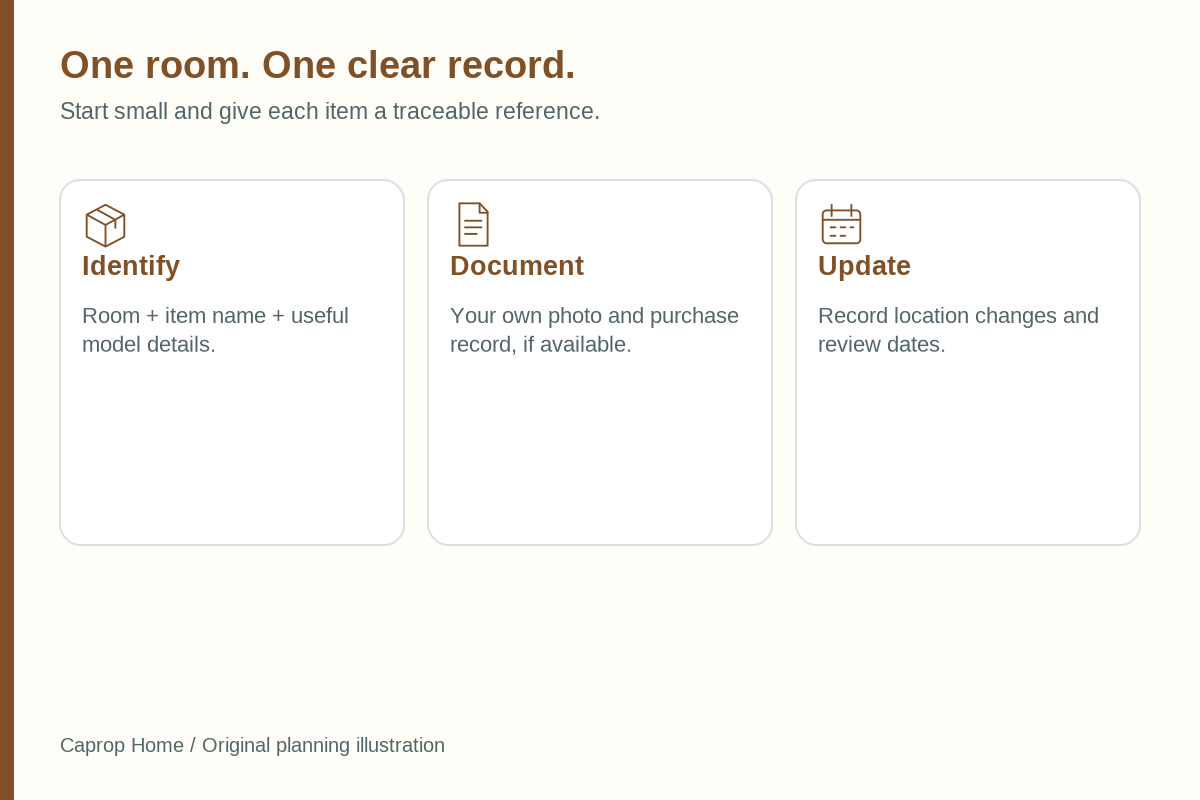
Use a stable item ID
Give each recorded item a short ID such as KIT-001. Keep that ID even if the item changes rooms. Put location in a separate field so a move does not force you to rename photographs and records. Group ordinary low-detail items when individual entries would create more work than value.
For example, “three blue storage tubs” may be a useful single entry. A borrowed projector should have its own entry with owner and return details. These are organizational choices, not rules about insurance documentation.
Record enough to take the next action
- Item name and a description that distinguishes it.
- Current room, cupboard or shelf.
- Owner, if the item is shared or borrowed.
- Model or reference number only when it helps maintenance.
- Optional photo or receipt location, stored privately.
- Next action: repair inquiry, return, move, donate or none.
Make updates part of the item’s journey
Update the record when an item arrives, changes location or leaves. Archive an entry rather than leaving it marked as present after disposal. If the inventory is shared, agree who updates it and where the current copy lives.
Avoid putting sensitive identity details or full payment information into a general household list. Keep the workbook in a location appropriate for its contents. This page provides an organization method, not instructions for official records, insurance claims or legal retention.
Before calling the first room complete, use the list to find three items. If the descriptions or locations are unclear, improve those fields now. That small retrieval check tests whether the system actually works.
Starter inventory
| ID | Item / distinguishing detail | Current location | Reference / next action |
|---|---|---|---|
| KIT-001 | Example: blue storage tubs, set of 3 | Kitchen / upper cupboard | No action |
| OFF-001 | Example: borrowed projector | Study / labeled shelf | Record owner and return date privately |
| Your item |
Put the plan to work
Use your own information to make a practical next step.
Open the planning worksheetSources and review
This guide is an original planning resource. Its worksheets and examples are organizational aids, not a report of product testing or verified customer results.
An original organizational worksheet and workflow. Examples are illustrative, not reports of customer results.
How these guides are prepared